Persian Tiles Crochet Blanket Pattern + Yarn & Hook Tips
The Persian Tiles crochet blanket is one of those projects that stops people mid-scroll. Designed by British designer Janie Crow, it combines geometric colorwork with a level of visual complexity that looks far more difficult than it actually is — once you understand the repeating motif structure, the pattern builds itself.
This guide covers everything you need to know before starting: yarn requirements, hook sizes, color ideas, where to find the official pattern, and honest answers to the most common questions. No pattern reproduction here — just context, resources, and the information that helps you decide if this is your next project.
About the Designer
One of the most iconic and admired crochet designs of all time is the Persian Tiles Blanket, created by the talented British designer Janie Crowfoot, also known as Janie Crow. Her work is recognized worldwide for its extraordinary use of color, geometry, and attention to detail, combining traditional crochet motifs with a refined artistic touch that has inspired makers everywhere.
The Persian Tiles pattern is entirely copyrighted and belongs to Janie Crow. This article does not reproduce or redistribute her written instructions or diagrams. Instead, it aims to celebrate and share information about this beautiful creation, providing context, inspiration, and resources for crocheters who wish to explore Janie Crow’s original work.
If you’d like to support the designer and get the official pattern, you can find it directly on her official website and Etsy store. All links shared here lead to the legitimate sources where the pattern is sold or featured, ensuring that credit and support go directly to the original creator.
Janie’s dedication to crochet design has made her one of the most respected names in the craft community. Her Persian Tiles Blanket continues to inspire crocheters around the world to experiment with color palettes, yarn textures, and motifs — turning each project into a personal expression of artistry.
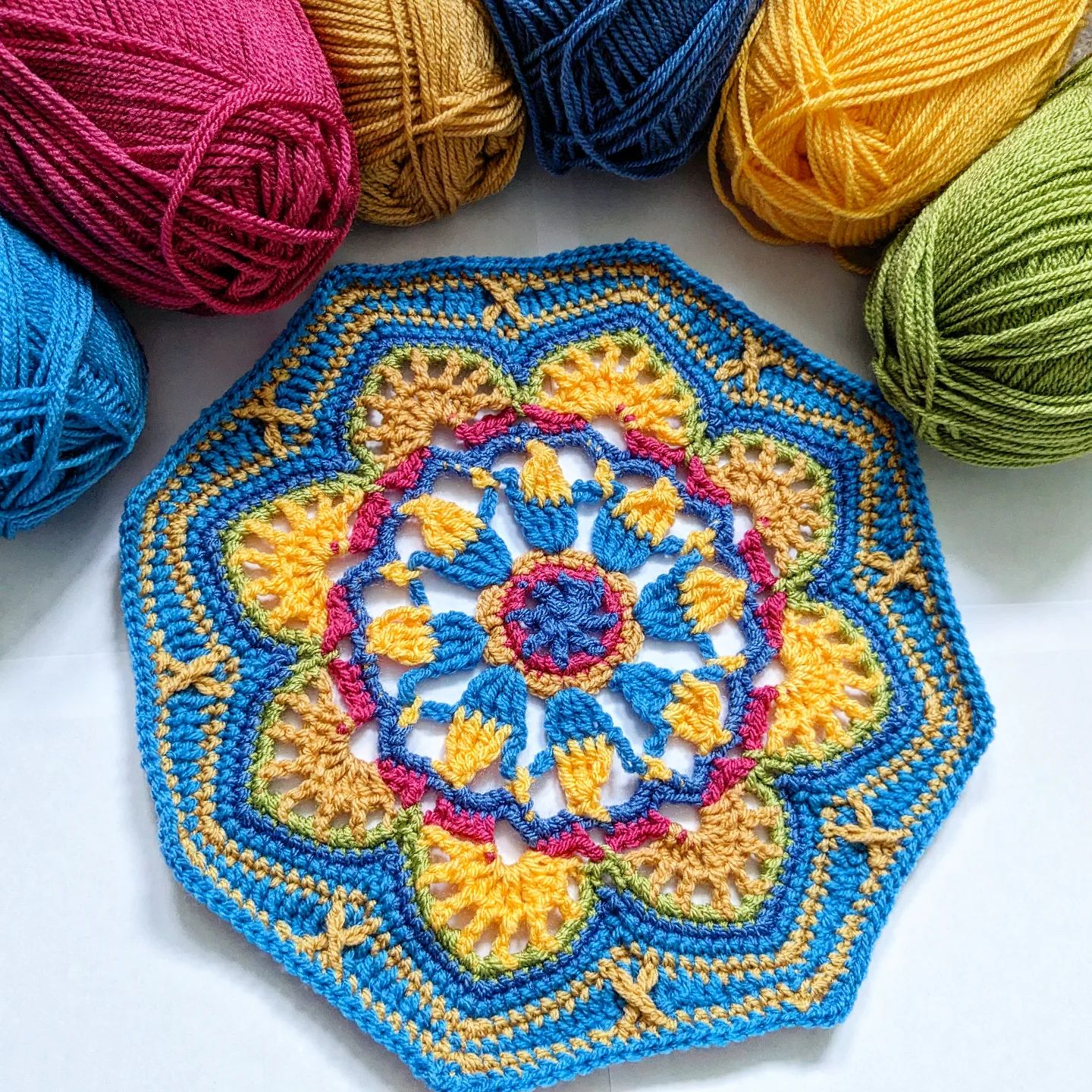
📏 Persian Tiles Crochet Blanket Size & Materials
Finished Blanket Size
Approx. 115 cm × 115 cm (45 in × 45 in)
Skill Level
Confident Beginner to Intermediate
Recommended Yarn
Stylecraft Special DK or Stylecraft Life DK
Hook Size
4.0 mm (US G / 6)
The final size of your Persian Tiles crochet blanket may vary depending on your yarn choice, tension, and the number of motifs you decide to include.
Check our Crochet Abbreviations Guide to support in your creation.
✨ Tip: You can easily adjust the size of the blanket by adding more motifs or extending the border.
🌈 Variations: Color, Size, and Project Ideas
Color Variations
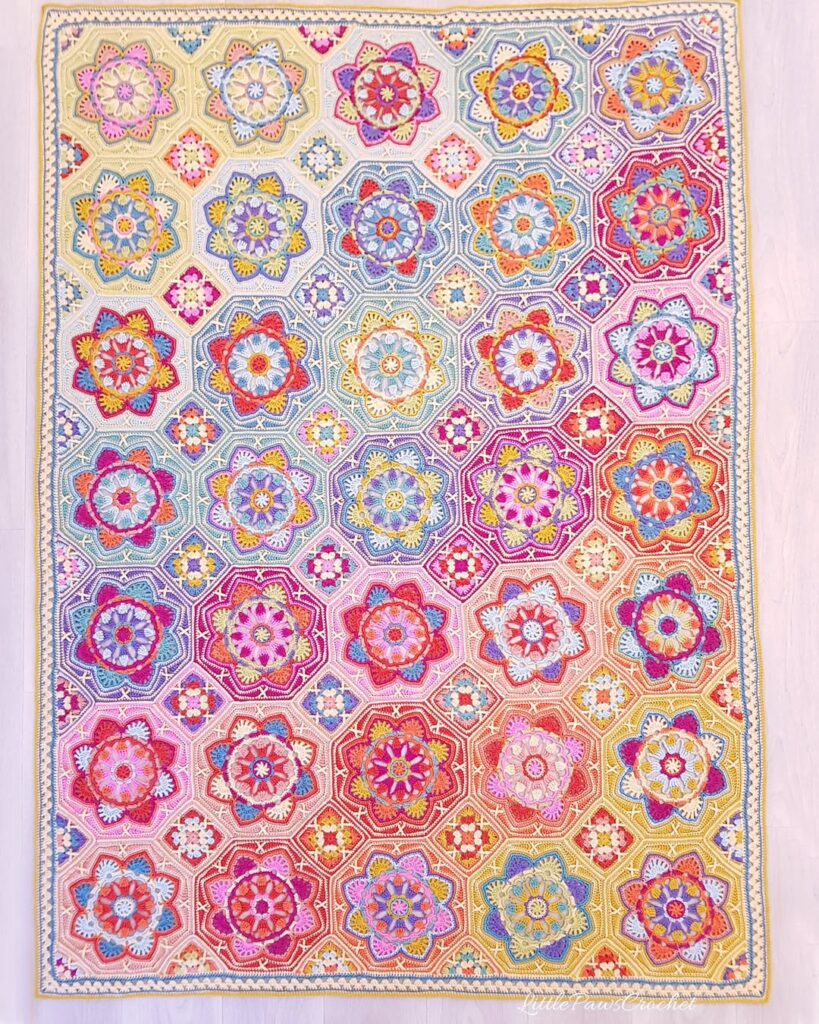
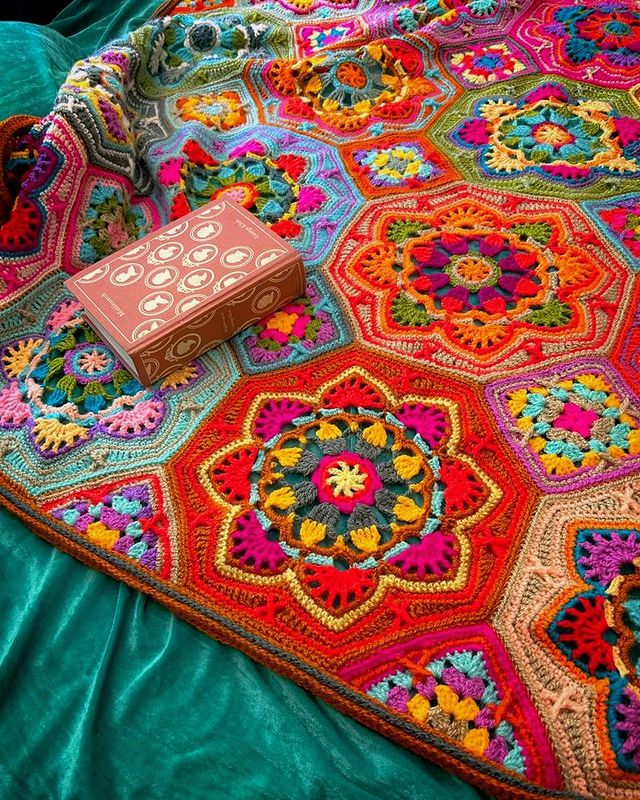
One of the most fascinating aspects of the Persian Tiles crochet pattern is how dramatically the design changes depending on the colors you choose.
Here are some popular color palette ideas:
Bold & Vibrant
Teal, coral, mustard, and deep navy combined with neutral tones create a striking modern look.
Soft Pastels
Blush pink, lavender, mint, and soft gray work beautifully for baby blankets or light decorative throws.
Monochrome Elegance
Different shades of gray, charcoal, and silver create a sophisticated minimalist aesthetic.
Earthy & Rustic
Olive green, terracotta, beige, and deep brown bring a cozy natural feel perfect for fall décor.
Persian Tiles Blanket — Sizes and Yarn Requirements
One of the most common questions about the Persian Tiles blanket is how much yarn you need. The answer depends heavily on the size you’re making and the number of colors in your palette.
As a general guide for a standard throw size Persian Tiles blanket:
- Main background color: approximately 600–800g worsted weight
- Accent colors (4–6 colors): approximately 100–200g each
- Total yarn: 1,200–2,000g depending on palette and size
Most Persian Tiles blankets are worked in Aran or worsted weight yarn (#4) with a 5.0mm hook. This produces a blanket that’s warm but not too heavy.
For yarn brand recommendations, Lion Brand Pound of Love and Paintbox Simply DK are popular choices in the Persian Tiles crochet community because of their consistent dye lots and wide color range — both important when working a multi-color geometric pattern.
🧵 Recommended Yarn & Crochet Hooks
Choosing the right yarn and hook size is essential to achieve the beautiful stitch definition that makes the Persian Tiles blanket so striking.
Recommended Yarn
Stylecraft Special DK – a soft and affordable acrylic yarn widely used for this pattern.
Recommended Hook
A 4.0 mm ergonomic crochet hook works best with DK yarn for this project.
🛒 Check ergonomic crochet hook sets
Not sure which crochet hook to choose?
Check our complete Crochet Hook Size Chart to understand US and metric hook sizes.
🧮 Estimated Materials & Cost
Many crocheters wonder about the investment before starting such a detailed project. Here’s an approximate breakdown (based on U.S. pricing):
- Yarn – 8–10 skeins of DK weight yarn (100g each) for a throw-size version. Price range: $5–7 per skein → $40–70.
- Hook – A comfortable ergonomic 4.0 mm hook if you don’t already own one → around $10.
- Notions – Stitch markers, tapestry needle, scissors → $10–15.
Total Estimated Cost: $50–95, depending on your yarn choice and whether you expand the blanket to a larger bed-size.
Is There a Free Persian Tiles Crochet Pattern?
The original Persian Tiles pattern by Janie Crow is a paid PDF available on Etsy and Ravelry. It’s one of the most detailed and well-written crochet patterns available — if you’re planning a full blanket, it’s worth the investment for the complete sizing charts, color guides, and step-by-step instructions.
That said, there are free resources available:
- YouTube tutorials — several crocheters have filmed complete walkthroughs of the Persian Tiles technique, including the playlist linked above. These cover the basic motif and color joining method.
- Ravelry — the pattern page on Ravelry has community notes, modifications, and project photos from thousands of makers that can help you understand the construction before purchasing.
If you’re new to colorwork crochet, watching the YouTube tutorials first is a good way to understand whether the technique suits your skill level before committing to the full pattern.
🧺 Care Instructions for a Persian Tiles Crochet Blanket
- Gentle Cleaning – Hand wash in cool or lukewarm water with a mild detergent. If machine washing, use a delicate cycle inside a mesh laundry bag.
- Avoid Heat – Never use a tumble dryer. Lay the blanket flat on a clean towel or drying rack to air dry naturally.
- Shape While Damp – While drying, gently reshape the motifs and edges to maintain the original form. This helps preserve the beauty of the design.
- Storage – Keep your blanket in a dry, cool place. Store it folded or rolled inside a breathable cotton bag to prevent dust and moisture buildup.
- Sunlight Protection – Avoid prolonged exposure to direct sunlight, as it can fade colors and weaken fibers over time.
- Maintenance – Inspect the blanket occasionally for loose ends or fraying. Weave in yarn tails securely or repair small issues before they worsen.
✨ Extra tip
If it’s cotton or acrylic, care is easier, but still follow the “no dryer” rule to avoid stretching.
If your blanket is made with wool yarn, consider using a gentle wool wash and add a lavender sachet when storing to protect against moths.
🧩 Persian Tiles Crochet Pattern Overview
The Persian Tiles crochet pattern is made from a set of beautiful floral-inspired motifs that are joined together to form a square blanket.
Key steps:
- Create individual motifs in a mix of colors
- Block the motifs (optional but highly recommended)
- Seam the motifs together
- Add a border for a polished finish
💡 Tip: Use a yarn needle or flat braid join technique for clean seams.
Persian Tiles Crochet Pattern — FAQs
How difficult is the Persian Tiles crochet pattern?
Intermediate to advanced. You need to be comfortable with color changes, carrying yarn, and reading a chart. If you’ve made basic granny squares and have done some colorwork, you can learn this pattern — but it’s not a beginner project.
What hook size for Persian Tiles crochet?
Most versions use a 5.0mm hook with Aran or worsted weight yarn (#4). Some crocheters prefer a 4.5mm for tighter stitches and more defined motif edges.
How long does a Persian Tiles blanket take?
Most makers report 3–6 months for a full throw size, working a few hours per week. The motifs are repetitive once you learn the sequence, so speed improves significantly after the first 10–15 squares.
Can I use any yarn for the Persian Tiles blanket?
Worsted weight acrylic works best for beginners — it’s forgiving, easy to wash, and available in hundreds of colors. Cotton is not recommended for this pattern because it has less elasticity, which makes the colorwork joins tighter and harder to manage.
Where can I find the Persian Tiles pattern?
The official pattern by Janie Crow is available on Etsy and Ravelry. Free video tutorials covering the technique are available on YouTube — see the links in the pattern sources section above.
🧶 Where to Get the Official Persian Tiles Pattern
The Persian Tiles crochet pattern was designed by Janie Crow and is protected by copyright.
To support the designer and access the official instructions, charts, and color guides, visit the original pattern sources through the unlock button below.
📥 Where to Find the Persian Tiles Pattern
The Persian Tiles is a paid pattern by designer Janie Crow. Here are the best sources:
- 🧶 Official Pattern by Janie Crow — Etsy (paid PDF)
- 🎥 Free Video Tutorial on YouTube
- 💕 Persian Tiles on Ravelry
If you enjoy the pattern, consider supporting Janie Crow by purchasing the official PDF. 💕
🔗 Related Patterns You Might Love
- Crochet Hook Size Chart (US & Metric) + Yarn Weight Guide
- 🌸 Lily Bag Crochet Pattern – Viral Crochet Flower Bag Tutorial
- 🧶 Easy Granny Square Pattern: A Beginner-Friendly Crochet Guide to Master Your First Square
- 🌈 Chevron Blanket Crochet Pattern: The Ultimate Beginner-Friendly Guide
- 🌪️ Free Crochet Wind Spinner Pattern: Easy DIY Garden Decor Tutorial
- 🧶 Free Granny Rectangle Pattern – Easy Crochet Tutorial for Modern Projects
- Crochet Flower Curtian Pattern – Free and Easy Crochet Tutorial for Home Decor
💬 Final Thoughts
The Persian Tiles blanket is the kind of project that teaches you something — about color, about patience, about what crochet can look like when you commit to a design. It’s not a quick weekend make, but every square you finish looks better than the last one.
If you make yours, tag us on Instagram or Pinterest @patternshere — we’d genuinely love to see your color choices.