Slip Stitch Crochet (sl st): Easy Step-by-Step Tutorial for Beginners
Crochet is made up of many stitches, and one of the most useful techniques every beginner should learn is the slip stitch crochet. Even though it is one of the simplest stitches in crochet, it plays an essential role in countless crochet patterns.
The slip stitch, often abbreviated as sl st, is commonly used to join stitches, finish rounds, move yarn across a row, and create decorative textures. Because of its versatility, you will encounter slip stitches frequently when reading crochet instructions.
Unlike taller stitches such as the half double crochet stitch or double crochet stitch, the slip stitch creates a very small and flat stitch. This makes it ideal for joining rounds in projects like hats, granny squares, and amigurumi.
Many beginners underestimate the importance of this stitch, but learning how to slip stitch correctly will make many crochet patterns much easier to understand.
In this beginner-friendly tutorial, you will learn:
• what the slip stitch is
• how to slip stitch step by step
• when to use slip stitch in crochet patterns
• common mistakes beginners make
• helpful tips to improve your crochet technique
By the end of this guide, you will confidently know how to slip stitch and understand how this small but powerful technique is used in crochet projects.
What Is a Slip Stitch in Crochet?
The slip stitch crochet is one of the most basic stitches used in crochet. In crochet patterns, it is abbreviated as sl st.
Unlike most crochet stitches, the slip stitch crochet does not add height to your fabric. Instead, it creates a small, tight stitch that is mainly used for joining, finishing, or moving yarn across stitches.
Because of its compact structure, the slip stitch crochet is frequently used to:
• join rounds in circular crochet projects
• move yarn across stitches without adding height
• create decorative surface crochet designs
• finish crochet edges neatly
Slip stitches may appear simple, but they are extremely important in crochet patterns. Many advanced crochet techniques rely on slip stitches to connect stitches or create smooth transitions between rounds.
Once you understand how slip stitches work, you will start noticing them in many crochet patterns.
Understanding the Structure of a Slip Stitch Crochet
Although the slip stitch is one of the smallest crochet stitches, it still has a clear structure that is helpful to understand when learning crochet.
A slip stitch crochet is made by inserting the hook into a stitch, yarn over, and pulling the yarn through both the stitch and the loop already on the hook. Because the yarn passes through both loops at once, the stitch remains very flat and compact.
Unlike taller stitches such as double crochet or half double crochet, the slip stitch does not build height in the fabric. Instead, it sits almost flush against the crochet fabric.
This is one of the reasons slip stitches are commonly used for joining rounds and creating neat finishing edges.
When looking closely at a slip stitch, you will notice that it still has a top loop similar to other crochet stitches. However, the stitch itself is much tighter and shorter.
Understanding how this stitch is structured can make it easier to recognize slip stitches when reading crochet patterns or examining finished projects.
How to Slip Stitch Crochet Step-by-Step
Learning how to slip stitch is very simple and requires only a few easy steps.
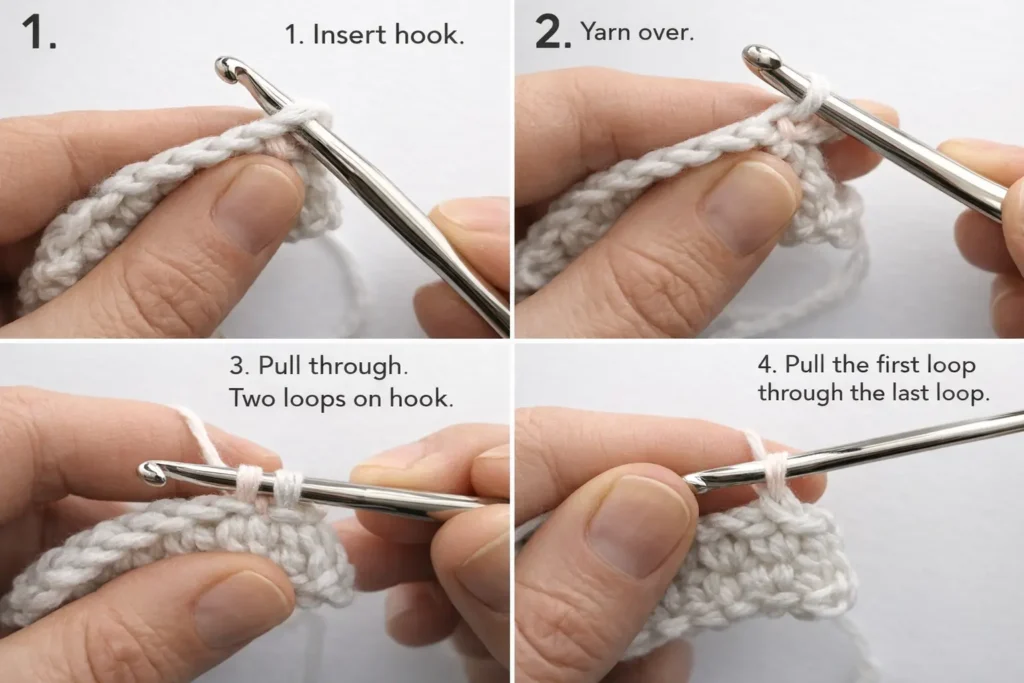
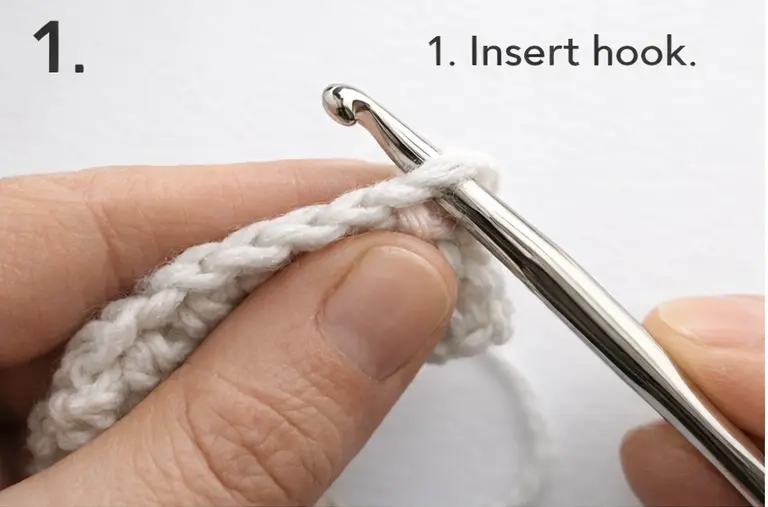
Step 1 – Insert the Hook
Insert your crochet hook into the stitch where you want to create the slip stitch.
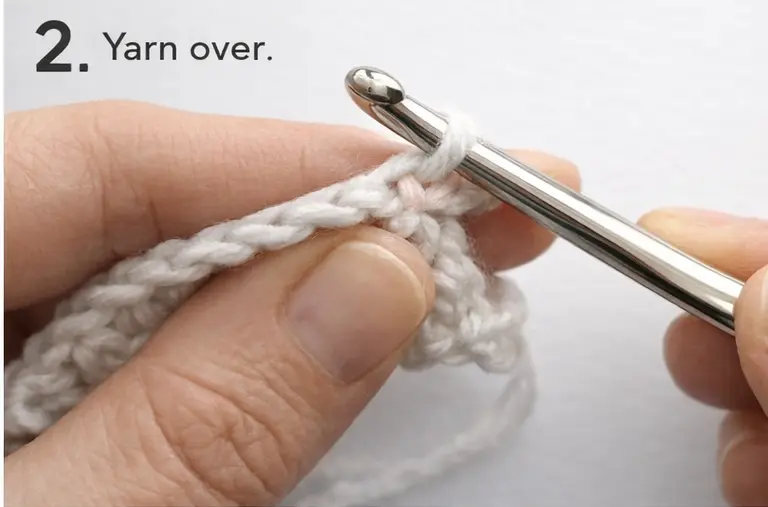
Step 2 – Yarn Over
Wrap the yarn over the hook from back to front.
Step 3 – Pull Through
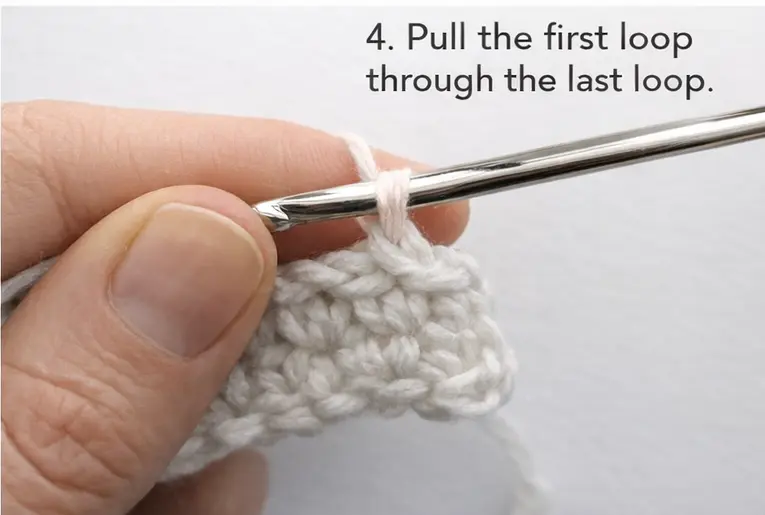
Pull the yarn through the stitch and immediately through the loop already on your hook.
Once the yarn passes through both loops, the slip stitch is complete.
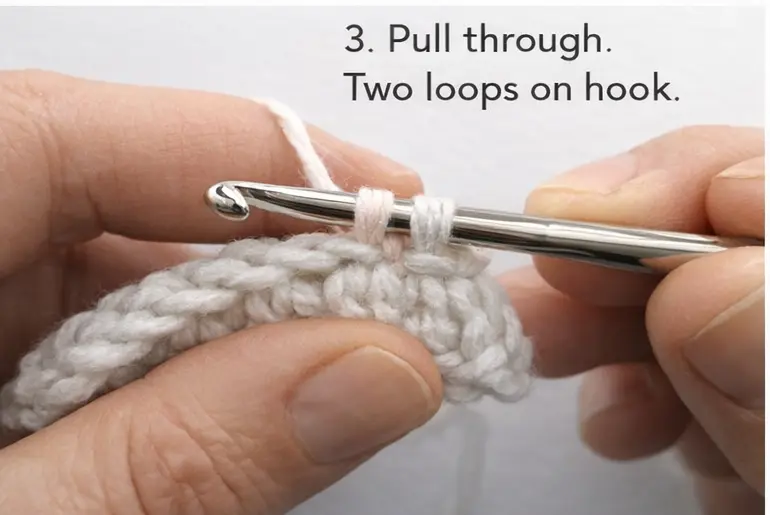
Because the stitch is very short, it does not increase the height of your crochet fabric.
Repeat this process whenever a pattern instructs you to create a slip stitch.
Watch the Slip Stitch Crochet Video Tutorial
If you prefer visual learning, watching a crochet tutorial can make it easier to understand how the slip stitch works.
In this video tutorial, you can see exactly how to insert the hook, pull the yarn through, and complete the slip stitch step by step.
Following a visual tutorial while practicing can help beginners quickly understand how the stitch is formed.
When to Use the Slip Stitch in Crochet
Slip stitches are used in many different crochet situations. Even though the stitch itself is small, it plays a very important role in the structure of crochet patterns.
Joining Rounds
One of the most common uses of slip stitches is joining rounds when working in circular crochet projects.
For example, when making granny squares or crochet hats, a slip stitch is often used to connect the last stitch of the round to the first stitch.
This creates a smooth and continuous round.
Moving Yarn Across Stitches
Slip stitches allow crocheters to move the yarn across stitches without adding height. This technique is useful when positioning the yarn for the next row or round.
Decorative Surface Crochet
Slip stitches can also be worked on the surface of crochet fabric to create decorative designs and textures.
Many crochet designers use surface slip stitches to outline shapes or create textured patterns.
Why Slip Stitch Is Important in Crochet Patterns
Many beginners assume that slip stitches are not very important because they are small and simple. However, this stitch plays a crucial role in many crochet techniques.
Slip stitches are often used to control the structure of crochet projects. Because they do not add height, they allow crocheters to move the yarn across stitches without changing the shape of the fabric.
This makes slip stitches extremely useful in patterns that require precise positioning of stitches.
Another reason slip stitches are widely used is that they create smooth joins when working in the round. Many circular crochet projects rely on slip stitches to connect the last stitch of the round to the first stitch.
Without slip stitches, many crochet patterns would have visible gaps or uneven transitions between rounds.
Even though the stitch itself is simple, it is one of the techniques that helps crochet projects look clean and professional.
Slip Stitch Crochet vs Single Crochet
Beginners often confuse the slip stitch with the single crochet stitch, but the two stitches serve different purposes.
Slip stitches are much shorter and are primarily used for joining or finishing work. Single crochet stitches, on the other hand, build the main structure of crochet fabric.
Slip stitches are also faster to make because they involve fewer steps.
Understanding the difference between these stitches helps beginners read crochet patterns more easily.
Slip Stitch Crochet vs Half Double Crochet
Another stitch that beginners often compare to the slip stitch is the half double crochet stitch.
While both stitches are common in crochet patterns, they serve very different purposes.
The half double crochet stitch creates a medium-height stitch that builds the structure of crochet fabric. It is often used in scarves, blankets, and garments because it creates a flexible but sturdy fabric.
Slip stitches, on the other hand, are mainly used for joining or finishing work. Because they do not add height, they are rarely used to create large sections of crochet fabric.
Understanding the difference between these stitches helps crocheters read patterns more confidently and choose the correct technique for each step of a project.
History of the Slip Stitch Crochet
Crochet techniques have evolved over centuries as fiber artists experimented with different stitch heights and textures.
The slip stitch became an essential technique early in the development of crochet because it allowed crocheters to join stitches neatly without adding extra height to the fabric.
Historical crochet patterns from the 19th century often used slip stitches when finishing circular motifs or joining decorative lace patterns. These early designs relied on slip stitches to maintain clean edges and smooth transitions between rounds.
As crochet grew in popularity, the slip stitch became a standard technique taught to beginners. Because it is simple to learn but extremely versatile, it quickly became one of the foundational stitches in crochet.
Today, slip stitches continue to appear in countless crochet patterns. From simple beginner projects to advanced crochet garments, this small stitch remains one of the most important techniques crocheters use.
Common Mistakes Beginners Make
Even though the slip stitch crochet is simple, beginners sometimes make a few common mistakes.
Pulling the Yarn Too Tight
Because the slip stitch is small, beginners often pull the yarn too tightly. This can make it difficult to insert the hook into the next stitch.
Confusing Slip Stitch with Other Stitches
Some beginners accidentally create a single crochet stitch instead of a slip stitch.
Remember that a slip stitch pulls through both loops at once.
Losing Track of Stitch Placement
Slip stitches are often used when joining rounds, so inserting the hook into the correct stitch is important to keep your project even.
Troubleshooting Slip Stitch Crochet
Even though the slip stitch is one of the simplest stitches in crochet, beginners sometimes run into small problems when practicing it. Fortunately, most of these issues are easy to fix with a few adjustments.
Understanding how to identify and correct these problems will help your stitches look cleaner and make your crochet experience much more enjoyable.
Stitches Too Tight
One of the most common issues beginners face is making slip stitches that are too tight. Because the slip stitch is naturally small and compact, pulling the yarn too tightly can make it difficult to insert your hook into the next stitch.
If your stitches feel tight or hard to work into, try loosening your tension slightly. Allow the yarn to move more freely as you pull it through the loops.
Using a slightly larger crochet hook can also help create smoother and more comfortable stitches while you practice.
Uneven Joins
Slip stitches are often used to join rounds when working in circular crochet projects. If the join looks uneven or slightly twisted, it may mean the hook was inserted into the wrong stitch.
Always make sure you are inserting the hook into the correct stitch when joining the round. Many crocheters find it helpful to place a stitch marker in the first stitch of the round so it is easier to identify later.
Taking a moment to check your stitch placement can make a big difference in the final appearance of your project.
Difficulty Inserting the Hook
If you are having trouble inserting the hook into the stitches, the yarn tension may be too tight or the yarn itself may be difficult to work with.
Practicing with a soft, medium-weight yarn can make learning crochet much easier. Lighter colored yarns are also helpful because they allow you to clearly see the stitches.
Beginners often find that using a 5 mm or 5.5 mm crochet hook makes it easier to insert the hook and pull yarn through smoothly.
With practice, your hands will develop a natural rhythm and the slip stitch will start to feel effortless.
How to Practice Slip Stitch Crochet Efficiently
Practicing the slip stitch crochet is one of the easiest ways to become more comfortable with crochet techniques.
A simple way to practice is by creating a small crochet swatch.
Start by making a foundation chain of around twenty stitches. Then insert your hook into each stitch and create slip stitches across the row.
Because the slip stitch does not add height, your swatch will remain very flat. This makes it easy to observe how the stitches connect to each other.
When practicing, focus on maintaining relaxed tension. Beginners often pull slip stitches too tightly, which can make it difficult to insert the hook into the next stitch.
Using a slightly larger crochet hook while practicing can make the stitches easier to see and work into.
Regular practice will help your movements become smoother and more natural.
Beginner Projects Using Slip Stitch Crochet
Once you understand how slip stitches work, you will start seeing them used in many crochet projects. Even though slip stitches are small, they play an important role in the structure of many patterns.
Slip stitches are most commonly used to join rounds, finish edges, and create smooth transitions between stitches. Because of this, they appear in a wide variety of crochet designs.
Here are some beginner-friendly crochet projects where slip stitches are frequently used.
Granny Squares
Granny squares are one of the most iconic crochet designs. These small square motifs are usually worked in the round and then joined together to create blankets, bags, and garments.
Slip stitches are often used at the end of each round to join the last stitch to the first stitch, creating a clean and continuous shape.
Crochet Hats
Many crochet hat patterns are worked in the round from the top down. Slip stitches help join each round neatly so the hat maintains a smooth and even structure.
Without slip stitches, the rounds might appear uneven or misaligned.
Amigurumi
Amigurumi is the art of crocheting small stuffed toys and characters. While many amigurumi projects use continuous rounds, slip stitches are sometimes used when finishing parts or joining pieces together.
They help create clean edges and secure connections between sections of the toy.
Crochet Bags
Crochet bags often use slip stitches when finishing edges, shaping straps, or joining sections of the bag together.
Because slip stitches are flat and compact, they create strong joins that help bags maintain their shape.
Blankets
Slip stitches are frequently used in crochet blankets when joining granny squares or finishing the edges of the blanket.
They can also be used as decorative borders that give the blanket a clean and polished look.
As you continue learning crochet, you will begin to recognize how often slip stitches appear in patterns. Even though they are small, they are one of the most useful techniques in crochet.
Crochet Techniques That Use Slip Stitch Crochet
Slip stitches are used in many different crochet techniques beyond basic joining.
One popular technique is surface slip stitch crochet, where the stitch is worked on top of existing crochet fabric to create decorative outlines or patterns.
Another technique is slip stitch crochet fabric, where an entire piece is made using only slip stitches. This creates a dense, knit-like texture that is very different from traditional crochet fabric.
Slip stitches are also used in techniques such as:
• crochet ribbing
• finishing borders
• joining crochet motifs
• shaping crochet garments
Learning how slip stitches function within these techniques helps crocheters expand their creative possibilities.
Crochet Tools That Make Learning Easier
If you are practicing crochet stitches like slip stitch crochet, having the right tools can make learning easier and more enjoyable.
Many beginners find it helpful to use:
• ergonomic crochet hooks
• medium-weight yarn
• stitch markers
• yarn needles
Using comfortable tools can improve your crochet experience and help you practice longer without discomfort.
FAQs
What does sl st mean in crochet?
In crochet patterns, sl st stands for slip stitch crochet.
Is slip stitch crochet easy for beginners?
Yes. The slip stitch is one of the easiest crochet techniques to learn.
Is slip stitch crochet shorter than single crochet?
Yes. Slip stitches are much shorter and do not add height to crochet fabric.
Why do crochet patterns use slip stitch crochet?
Slip stitches are commonly used to join rounds, finish edges, and move yarn across stitches.
Can you crochet an entire project using slip stitch crochet?
Yes, it is possible to crochet an entire project using slip stitches. This technique is sometimes called slip stitch crochet fabric. It creates a dense and textured fabric that resembles knitting.
Why are my slip stitches so tight?
Slip stitches often become tight when beginners pull the yarn too firmly. Try relaxing your tension or using a slightly larger crochet hook.
Do slip stitches count as stitches?
In most crochet patterns, slip stitches do not count as regular stitches unless the pattern specifically states otherwise.
See Also
If you are learning crochet basics, these beginner-friendly guides from Patterns Here can help you continue building your crochet skills:
• How to Double Crochet Stitch (dc): Easy Step-by-Step Tutorial for Beginners
• How to Half Double Crochet Stitch (hdc): Easy Step-by-Step Tutorial for Beginners
• 🧶 Magic Circle Crochet (Magic Ring) – Easy Step-by-Step Guide
• Crochet Hook Size Chart (US & Metric) + Yarn Weight Guide
These tutorials will help you build a strong foundation in crochet techniques.
Conclusion
The slip stitch crochet may be one of the smallest crochet stitches, but it plays a very important role in many crochet patterns.
By learning how to slip stitch crochet correctly, beginners can join rounds neatly, finish projects cleanly, and explore more advanced crochet techniques.
As you continue practicing crochet basics, mastering stitches like slip stitch crochet, half double crochet, and double crochet will help you build confidence and expand the types of projects you can create.