
🧶 Magic Circle Crochet (Magic Ring) – Easy Step-by-Step Guide
Introduction
The magic circle crochet, also known as the magic ring crochet, is one of the most useful techniques every crocheter should learn. This simple but powerful method allows you to start crochet projects in the round with a completely closed center — eliminating the small hole that usually appears when beginning with a chain.
The magic circle technique is commonly used for projects such as:
• amigurumi
• crochet hats
• granny squares
• crochet flowers
• circular motifs
Because the center loop tightens completely, it creates a cleaner and more professional look compared to traditional starting chains.
In this guide, you’ll learn exactly how to make a magic circle crochet step-by-step, along with tips, troubleshooting advice, and practical examples of projects that use this essential crochet technique.
🧩 Magic Circle Crochet at a Glance
| Technique | Difficulty | Time to Learn | Used For |
|---|---|---|---|
| Magic Circle Crochet | Beginner | 5 minutes | Amigurumi, hats, motifs |
Also called:
• magic ring crochet
• adjustable ring crochet
• adjustable loop crochet
🧵 What Is the Magic Circle in Crochet?
The magic circle crochet technique is a method used to start crocheting in the round while keeping the center tightly closed.
Instead of chaining stitches and joining them into a ring, the magic circle uses an adjustable loop that tightens once the first round of stitches is complete.
Benefits of using a magic circle include:
• no visible hole in the center
• adjustable tension
• cleaner project appearance
• ideal for amigurumi
Many crocheters prefer the magic circle over the traditional chain ring because it allows the center to close completely.
🧠 Why the Magic Circle Crochet Is Better Than a Chain Ring
Many beginners start crochet circles using a simple chain ring, but experienced crocheters often prefer the magic circle technique.
The main difference between these two methods is how the center of the project behaves once the stitches are complete.
When using a chain ring, a small hole often remains in the middle of the project. This happens because the chains create a fixed circle that cannot tighten further.
The magic circle, on the other hand, creates an adjustable loop that can be tightened completely after the first round of stitches is finished. This produces a cleaner and more professional result.
Advantages of using the magic circle include:
- completely closed center
- adjustable tension
- better structure for amigurumi
- improved durability for toys and hats
Because of these benefits, most modern crochet patterns recommend starting circular projects with the magic ring technique.
Once you become comfortable with the magic circle, it will likely become your preferred method for beginning crochet projects worked in the round.
🪡 Materials Needed for Magic Circle Crochet
To create a magic circle in crochet, you only need a few simple tools. One of the reasons this technique is so popular is that it requires no special equipment — just the same basic supplies used for most crochet projects.
Yarn
Almost any type of yarn works well when practicing the magic circle crochet technique. However, beginners usually find it easier to learn with yarn that has a medium thickness and smooth texture.
Common yarn choices include:
• Cotton yarn – provides excellent stitch definition and durability
• Acrylic yarn – affordable, beginner-friendly, and widely available
• Wool or wool blends – soft and flexible, great for garments and winter projects
For beginners, medium weight yarn (#4 worsted) is often the best option. It makes the stitches easy to see and allows the adjustable loop to tighten smoothly without slipping.
Very thin yarn can make it harder to see stitches, while extremely bulky yarn can make the loop more difficult to control when learning the technique.
Crochet Hook
The magic circle can be made with any crochet hook size, but using a comfortable, medium-sized hook usually makes the learning process easier.
Recommended hook sizes include:
• 3.5 mm (E/4)
• 4.0 mm (G/6)
• 4.5 mm (7)
These sizes pair well with worsted or DK yarn and provide good stitch control when working the first round inside the magic ring.
If you are unsure which crochet hook size works best for your yarn, it’s always helpful to check the yarn label recommendations.
🪄 How to Make a Magic Circle Crochet (Step-by-Step)
Learning the magic circle may feel tricky at first, but once you practice it a few times it becomes second nature.
Follow these steps carefully.
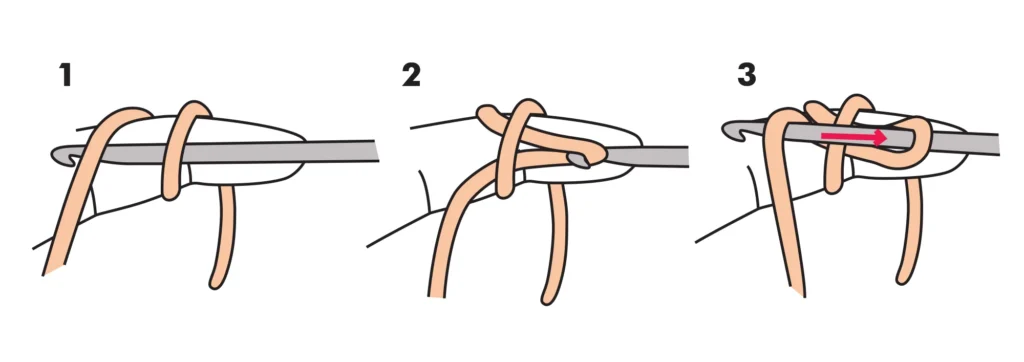
Step 1 – Wrap the Yarn
Place the yarn across your fingers and wrap it around them to create a loop.
The working yarn should cross over the tail end to form an adjustable ring.
Step 2 – Insert Your Crochet Hook
Insert the hook under the first strand of yarn and pull the second strand through.
You now have a loop on your hook.
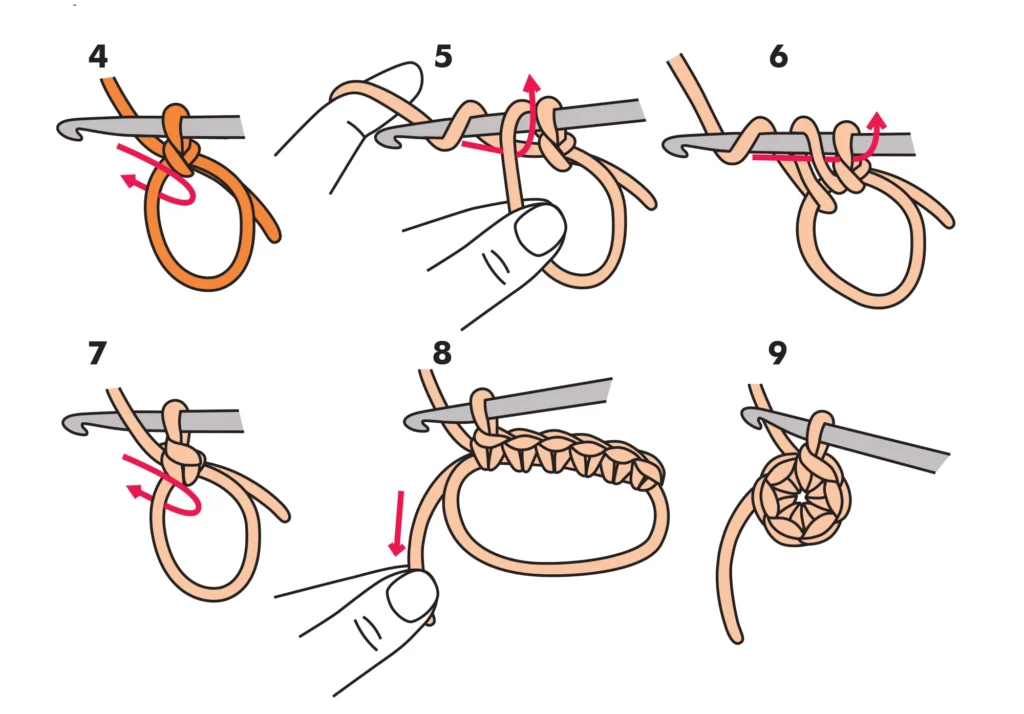
Step 3 – Chain One
Make a chain stitch to secure the loop.
This does not count as a stitch.
Step 4 – Crochet the First Round
Work the required number of stitches into the loop.
Example:
• 6 single crochets for amigurumi
• 10 double crochets for granny circles
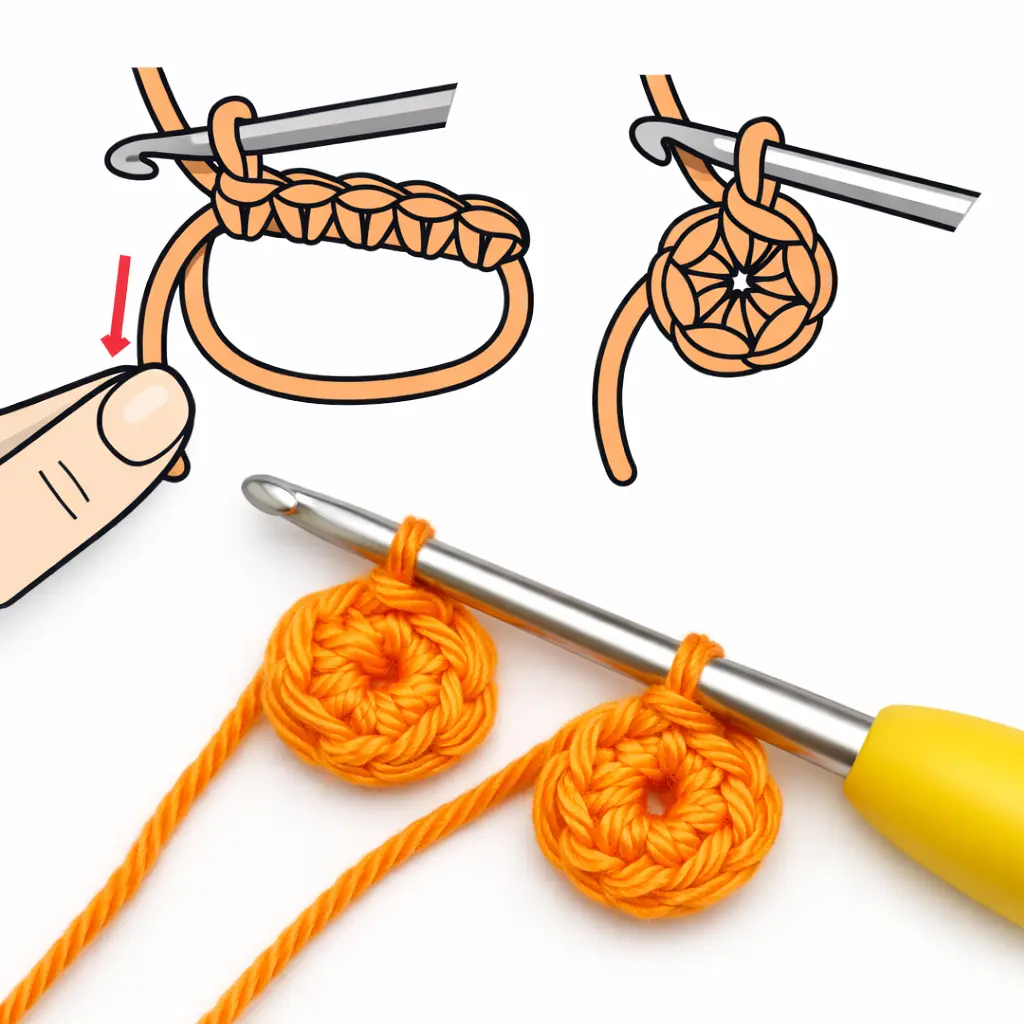
Step 5 – Tighten the Circle
Pull the yarn tail gently.
The loop will close completely, eliminating the hole in the center.
🎥 Magic Circle Crochet Video Tutorial
Many crocheters find the magic circle easier to understand when watching the movement of the yarn and hook in real time.
If you are learning this technique for the first time, watching a short video tutorial can help you visualize how the loop tightens and how the stitches are worked inside the adjustable ring.
When following a video tutorial, pay attention to:
- how the yarn is wrapped around the fingers
- where the crochet hook enters the loop
- how the first chain stitch secures the ring
- how the yarn tail is pulled to close the center
Combining written instructions with visual demonstrations can make the learning process much faster and more intuitive for beginners.
📸 Magic Circle Crochet Step Tutorial
🧶 Magic Circle vs Chain Ring
Many beginners wonder whether they should use a magic circle or a traditional chain ring.
| Method | Result |
|---|---|
| Magic Circle | center closes completely |
| Chain Ring | small hole remains |
Magic circles crochet are preferred for:
• amigurumi
• toys
• flowers
Chain rings are sometimes used for:
• lace crochet
• decorative motifs
🧵 Crochet Stitches Commonly Used with the Magic Circle Crochet
The magic circle crochet technique can be used with many different stitches depending on the project you are creating.
Most patterns begin the first round of stitches directly inside the magic loop.
Common stitches used include:
Single Crochet (SC)
The most common stitch used with the magic circle, especially in amigurumi patterns.
Half Double Crochet (HDC)
Often used for hats and textured crochet motifs.
Double Crochet (DC)
Commonly used in granny squares and decorative crochet circles.
Treble Crochet (TR)
Used for lace patterns and delicate crochet designs.
Because the magic circle works as an adjustable starting loop, it adapts easily to many stitch types and crochet techniques.
🧸 Crochet Projects That Use the Magic Circle Crochet
Once you learn how to make a magic circle crochet, many crochet projects suddenly become easier to start.
This technique is especially useful for patterns that begin in the round.
Popular beginner projects that use the magic circle include:
Amigurumi Toys
Small crochet animals and dolls almost always begin with a magic ring.
Crochet Hats
Starting hats with a magic circle prevents a hole at the top of the crown.
Crochet Flowers
Many flower patterns begin with a magic circle to create a tight center.
Granny Squares
Some modern granny square designs start with a magic ring instead of chains.
Crochet Coasters
Circular coasters are another simple project where the magic circle technique works beautifully.
Learning this technique opens the door to many creative crochet projects.
🧠 Why Beginners Struggle with the Magic Circle Crochet
Although the magic circle is simple once mastered, beginners often encounter a few common challenges.
The loop keeps slipping
This happens when the yarn is wrapped too loosely.
The circle won’t tighten
Make sure you are pulling the correct yarn tail.
Stitches twist
Practice maintaining even tension while crocheting into the loop.
With a few attempts, the technique quickly becomes much easier.
⚠️ Common Mistakes When Making a Magic Circle Crochet
Although the magic circle is simple once mastered, beginners often make a few common mistakes while learning the technique.
Pulling the wrong yarn strand
One of the most frequent mistakes is pulling the working yarn instead of the yarn tail when trying to tighten the ring.
Loose stitches in the first round
If the stitches are too loose, the center of the circle may not close completely.
Forgetting to secure the yarn tail
After tightening the magic circle, the yarn tail should always be woven securely through the stitches to prevent the ring from loosening later.
Wrapping the yarn incorrectly
If the loop is wrapped in the wrong direction around the fingers, the stitches may twist and become harder to control.
Practicing the technique a few times usually resolves these issues quickly.
🔧 Magic Circle Crochet Troubleshooting
Even though the magic circle is a simple technique once mastered, many beginners run into a few common issues when learning it for the first time. Fortunately, most of these problems have very quick solutions.
Problem: The ring won’t close
If the center of your magic circle refuses to tighten, the most common reason is pulling the wrong strand of yarn.
When tightening the ring, always pull the yarn tail, not the working yarn connected to the yarn ball. The tail is what closes the adjustable loop.
If the ring still doesn’t close properly:
• make sure the loop was not twisted before working the stitches
• gently rotate the stitches around the loop to loosen them slightly
• pull the yarn tail slowly instead of tugging sharply
Once the stitches slide smoothly along the loop, the center should close neatly.
Problem: Stitches look uneven
Uneven stitches in the first round usually happen because the tension of the adjustable loop is inconsistent.
To improve stitch consistency:
• try using a slightly larger crochet hook
• maintain steady tension with the yarn
• avoid pulling stitches too tightly while working into the ring
Remember that the first round of stitches inside a magic circle can feel awkward at first, but with practice they quickly become smoother and more even.
Problem: The center reopens later
Sometimes the magic circle closes perfectly during crocheting but loosens later while the project is being used or washed.
To prevent this from happening, it is important to secure the yarn tail properly after finishing the first round.
The best way to do this is:
• weave the yarn tail through several stitches on the back side of the work
• pass the yarn tail in two different directions for extra security
• avoid trimming the tail too short
Properly securing the yarn tail ensures the center of your crochet project remains tight and stable over time.
⭐ Pro Tips for Perfect Magic Circle Crochet
Once you understand the basic technique, a few small tricks can make the magic circle even easier and more reliable. Many experienced crocheters use these simple methods to create neat, professional-looking centers every time.
Hold the loop firmly
When starting the magic circle, the adjustable loop can sometimes collapse or twist while you are inserting the hook.
To avoid this, hold the loop firmly with your fingers while working the first few stitches. Maintaining steady tension helps keep the loop stable until the first round is completed.
After the stitches are secure, the loop becomes much easier to manage.
Use lighter yarn for practice
If you are learning the magic circle for the first time, practice with medium weight yarn (#4 worsted) or DK yarn.
These yarns make the stitches easier to see and control. Very thin yarn can make the stitches harder to identify, while extremely bulky yarn can make the loop too stiff.
Using a smooth acrylic yarn is also helpful because it slides easily on the crochet hook.
Practice with single crochet
Single crochet stitches are the easiest stitch type to practice when learning the magic circle technique.
They are shorter and more compact than other stitches, which helps beginners maintain better control while working inside the loop.
Once you feel comfortable making a magic circle with single crochet, you can easily move on to:
• half double crochet
• double crochet
• treble crochet
The basic technique remains exactly the same.
Use stitch markers for larger projects
When working projects that begin with a magic circle — especially in spiral crochet — placing a stitch marker in the first stitch of the round helps keep track of where each round begins.
This is particularly helpful in amigurumi patterns where accurate stitch counting is essential.
🎨 Variations of the Magic Circle Crochet
Although the classic magic circle is the most widely used method, there are actually several variations that crocheters use depending on their personal preference and the type of project they are making.
Each variation creates an adjustable center but offers slightly different advantages.
Single-Wrap Magic Ring
This is the most common version and the method typically taught to beginners.
The yarn is wrapped once around the fingers to create a loop, and the stitches are worked directly into this adjustable ring.
Advantages of this method include:
• quick and simple to learn
• minimal yarn usage
• perfect for small projects like amigurumi
Because of its simplicity, the single-wrap magic ring is the method most crochet tutorials demonstrate.
Double-Wrap Magic Ring
In the double-wrap method, the yarn is wrapped twice around the fingers before crocheting the stitches into the loop.
This creates a slightly thicker adjustable ring that offers additional stability.
Benefits of this method include:
• stronger center for larger projects
• reduced risk of the loop loosening over time
• better support for heavier yarns
Some crocheters prefer this technique for blankets, bags, or projects that will experience frequent use.
Adjustable Chain Ring
The adjustable chain ring is a hybrid technique that combines a small chain loop with an adjustable yarn tail.
Instead of wrapping yarn around the fingers, a short chain is made and the stitches are worked into the loop created by the chains.
This technique is sometimes recommended for beginners who struggle with the traditional magic circle method.
While it may not close quite as tightly as a true magic circle, it still produces a neat starting point for many crochet patterns.
🧼 Care Instructions for Projects Started with a Magic Circle Crochet
Crochet projects that begin with a magic circle are cared for in the same way as any other handmade crochet piece. However, because the center of the project is adjustable, proper washing and storage help maintain its shape and durability over time.
Following a few simple care guidelines will help preserve the structure and beauty of your crochet work.
Wash gently when possible
Whenever possible, hand washing is the safest method for crochet items.
Use cool or lukewarm water with a mild detergent, and gently squeeze the fabric instead of wringing it. This helps protect the stitches and prevents unnecessary stress on the adjustable ring.
For machine washing, always choose a delicate cycle and consider placing the item inside a mesh laundry bag.
Avoid hot water
Hot water can weaken certain yarn fibers and cause stretching or distortion in crochet stitches.
Using cool water helps preserve the yarn’s elasticity and prevents the center of the magic circle from loosening over time.
Reshape while drying
After washing, lay the crochet item flat on a towel or drying rack and gently reshape it while it is still damp.
This step is especially important for circular projects such as hats, coasters, or amigurumi pieces, as it helps maintain the structure of the stitches and keeps the magic circle center looking neat.
Store projects properly
When storing crochet items, it is best to fold them instead of hanging them. Hanging crochet pieces may stretch the fabric and place extra tension on the stitches.
Keeping crochet projects in a breathable cotton bag or drawer also protects them from dust and humidity.
Proper storage helps preserve the stitch definition and ensures that the magic circle remains secure for years.hing.
🧶 Crochet Techniques Related to the Magic Circle Crochet
Learning the magic circle crochet technique is often the first step toward mastering many other crochet methods used in projects worked in the round. Once you understand how the adjustable loop works, it becomes much easier to explore additional techniques that build upon this same foundation.
These related crochet techniques frequently appear in patterns that begin with a magic circle.
Increasing in the Round
Many crochet projects that start with a magic circle continue by increasing stitches in each round to create a flat circular shape. This technique is commonly used in:
• crochet hats
• amigurumi toys
• circular coasters
• crochet rugs
By evenly increasing stitches in each round, the circle gradually expands without curling or forming a bowl shape.
Spiral Crochet
Spiral crochet is another technique frequently used together with the magic circle. Instead of joining rounds with a slip stitch, the stitches continue in a continuous spiral.
This method is especially popular for:
• amigurumi animals
• crochet dolls
• plush toys
Working in a spiral helps create smooth, seamless rounds without visible joins.
Crochet Stitch Markers
When crocheting in the round, especially when using spiral crochet, stitch markers become extremely useful. They help keep track of the beginning of each round and ensure the stitch count remains accurate throughout the project.
Many crocheters place a stitch marker in the first stitch of each round to avoid confusion.
Invisible Decrease
Another technique often paired with the magic circle is the invisible decrease. This method reduces stitches while keeping the fabric smooth and neat.
Invisible decreases are commonly used in amigurumi projects to shape heads, bodies, and limbs without creating noticeable gaps in the stitches.
Joining Motifs
In some crochet patterns, individual motifs are created using the magic circle and then joined together later. This technique appears frequently in designs such as:
• granny squares
• crochet blankets
• decorative motifs
Each motif begins with a magic ring and expands outward before being joined with other pieces.
🔗 More Crochet Guides
If you’re learning crochet techniques, these guides may also help:
• Crochet Hook Size Chart
• How to Read Crochet Patterns (soon)
• Double Crochet Stitch Guide (soon)
These tutorials will help you build a strong crochet foundation and improve your skills across many different projects.
❓ FAQ – Magic Circle Crochet
Is magic circle crochet the same as magic ring?
Yes. The terms magic circle crochet and magic ring crochet refer to the same technique.
Is magic circle crochet hard for beginners?
It may feel tricky at first, but most crocheters master it after a few tries.
Can I replace a magic circle crochet with a chain ring?
Yes, but the center may leave a small hole.
Why does my magic circle crochet unravel?
The yarn tail must be secured by weaving it through the stitches.
What stitch is used in a magic circle crochet?
Most patterns use:
• single crochet
• half double crochet
• double crochet
📣 Follow Patterns Here for More Crochet Inspiration
Love learning new crochet techniques like the magic circle? We share new patterns, tutorials, and crochet inspiration every week.
Follow Patterns Here on social media to discover new crochet ideas, trending projects, and free pattern guides.
📌 Pinterest – Save beautiful crochet patterns and tutorials
👉 Follow us on Pinterest for daily inspiration
📘 Facebook – Join our crochet community
👉 Follow our Facebook page for new patterns and updates
Whether you’re a beginner or an experienced crocheter, our pages are full of inspiration to help you start your next handmade project.
🎉 Final Thoughts
The magic circle crochet technique is one of the most useful skills any crocheter can learn. It creates a clean, professional center and works beautifully for projects like amigurumi, hats, and motifs.
Although it may feel awkward the first few times, practicing the magic ring method will quickly make it part of your crochet routine.
Once mastered, this simple technique opens the door to countless crochet projects and creative possibilities.